Mold after a leak is common, and it can start within 24 to 48 hours. Here is what to do in that window.
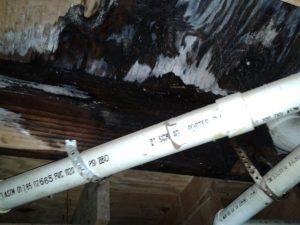
Mold does not need a flood. A slow drip under a sink, a roof leak after a storm or a failed washing machine hose can all give mold what it needs: moisture, something to feed on, like drywall paper or wood, and time. In warm, humid weather like Atlanta’s, growth can start within 24 to 48 hours. What you do in those first two days makes the biggest difference.
Hour 0 to 6: stop the water and document
- Shut off the water supply or stop the source of the leak.
- Turn off power to wet areas if it is safe to reach the breaker.
- Photograph and video everything before you move anything; your insurer will want to see it.
- Move furniture, rugs, boxes and electronics out of the wet area.
Hour 6 to 24: get the water out
- Remove standing water. A wet/dry vacuum works for small areas; larger amounts need extraction equipment.
- Pull up wet area rugs and get them out to dry. Wall-to-wall carpet pad soaks up water like a sponge and often cannot be dried in place.
- Open cabinet doors and closets in the wet area so air can reach inside.
- Run air conditioning or a dehumidifier. Opening windows only helps if the air outside is drier than inside, which in a Georgia summer it often is not.
Hour 24 to 48: find the hidden water
This is where most mold problems start. Water that ran into wall cavities, under flooring or into the ceiling below will not dry with fans in the room. Check the bottom of walls, under cabinets and the ceiling below the leak for stains, softness or swelling. A moisture meter gives a far better answer than touch. If materials are still wet after a day or two, they usually need to be opened up or removed to dry.
What not to do
- Do not just paint over stains. The moisture and any growth stay underneath.
- Do not rely on bleach. It may lighten what you can see, but it does not reach growth inside porous materials like drywall and wood.
- Do not run the HVAC fan if you already see or smell mold in the area; it can spread spores through the house.
- Do not close up walls or put flooring back until the materials have been measured as dry.
When to call a professional
- The leak soaked drywall, insulation or subfloor, not just a hard surface
- The water came from a sewer line or from outside (floodwater)
- You can see mold, or smell it, and the patch is bigger than a small spot
- Anyone in the home has asthma, allergies or a weakened immune system
Rapid Restore 24 handles both sides of this: water damage restoration to dry the structure properly, and mold remediation when growth has already started. A licensed mold assessor we work with carries out mold inspections and testing, and our own crews do the removal. See also our guides to burst pipes and storm and flood damage.
Questions about damage in your home or business? Call Rapid Restore 24 at 404-445-4561. We answer our phone 24/7.
When mold after a leak needs a professional
You can often clean small spots on hard surfaces with detergent and water. However, the EPA says larger areas, roughly more than 10 square feet, are a job for an experienced contractor (EPA guide to mold and moisture). Mold after a leak also means someone has to fix the moisture source first, or it comes back. A licensed mold assessor we work with does inspection and testing, and our crews handle mold remediation. See also water damage remediation and burst pipe cleanup.