How do you know if water damage was dried properly? Surfaces dry first, so looks can fool you. Here is how to check.
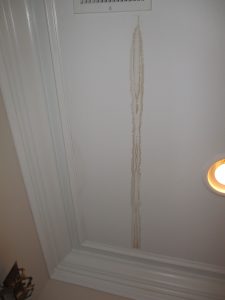
After a leak or flood, the carpet feels dry, the drywall looks fine and the fans are gone, so the job seems done. But the surface drying first is normal; what matters is whether the materials underneath are dry. Water left inside walls, subfloors and insulation is the most common reason homeowners end up with mold, warped floors or a musty smell months later.
Why “feels dry” is not dry
Drywall, wood and concrete absorb water and release it slowly. The outer layer dries quickly as air moves across it, while the inside stays wet. Water also travels where you cannot see it: under baseboards, into the bottom of wall cavities, beneath vinyl and laminate, and down into the ceiling of the floor below. A wall can look and feel normal while its bottom few inches are still saturated.
How professional drying is measured
Proper drying is a measurement, not a judgment call. A restoration crew should:
- Take readings on day one with moisture meters, and use thermal imaging to find wet areas behind surfaces.
- Take reference readings from unaffected materials in the same house, which shows what “normal dry” is for that home.
- Re-check every day and adjust air movers and dehumidifiers based on what the readings show.
- Stop only when wet materials match the dry reference, and record the final readings.
Those daily readings are also useful documentation for an insurance claim.
Warning signs that something is still wet
- A musty or earthy smell that comes back after cleaning
- Baseboards or trim pulling away from the wall, or paint bubbling
- Hardwood boards cupping (edges higher than the middle) or laminate swelling at the seams
- Stains spreading or reappearing on drywall or ceilings
- Higher humidity in one room than the rest of the house
Questions to ask whoever dried your home
- What were the moisture readings at the start and at the end?
- What did you use as the dry reference?
- Did you check inside the wall cavities and the subfloor, not just the surface?
- Was anything closed up (drywall, flooring, cabinets) before it was confirmed dry?
If you do not get clear answers, or you notice any of the warning signs above, it is worth having the area checked with a meter before it turns into a mold problem. Our water damage restoration process dries to a measured standard, and our mold remediation team handles cases where growth has already started.
Questions about damage in your home or business? Call Rapid Restore 24 at 404-445-4561. Our phone is answered 24/7.
Checking if water damage was dried properly
Ask your restoration company for the moisture readings. A good contractor records readings in the same spots every day. Then they stop drying only when materials match a dry reference. If nobody took readings, nobody knows whether the water damage was dried properly.
Next, watch for warning signs over the following weeks: a musty smell, baseboards pulling away, bubbling paint, cupping floors or a stain that grows. Any of these suggests water is still inside the wall or floor.
Hidden moisture matters because mold needs only a damp surface and time. The EPA advises drying wet materials within 24 to 48 hours to help prevent mold growth (EPA guide to mold and moisture).
If you are not sure, a second check costs far less than tearing out moldy drywall later. We can take readings with moisture meters and thermal imaging and tell you what is still wet. See our water damage remediation page, the drying timeline, or contact us.