DIY sewage cleanup looks cheaper, but it puts your health at risk. This guide explains why sewage backups need a professional and what to do until help arrives.
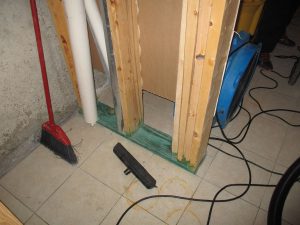
If sewage has backed up into your home, stay out of the affected area, keep children and pets away, stop using your drains, and call a professional. Sewage is not the same as water from a burst supply line, and treating it like a mop-and-bucket job can spread contamination and put your household at risk.
Why sewage is different from clean-water damage
Water from a broken supply pipe starts out clean. Sewage does not. It can carry bacteria, viruses and parasites, along with whatever else came down the line. Restoration professionals treat it as the most contaminated category of water damage.
Two things make it harder than other water losses:
- Contamination. You can’t see or smell everything that matters. Water that looks like it has cleared up can still leave contamination on surfaces and in the materials underneath.
- Porous materials. Carpet, carpet pad, drywall, insulation, upholstered furniture, mattresses and particleboard cabinets soak up contaminated water and hold it. These materials usually can’t be made safe again and are typically removed and thrown away.
Hard, sealed surfaces such as tile, glass, metal and sealed concrete can often be cleaned and disinfected. That is why a good cleanup involves sorting what can be saved from what can’t, not just scrubbing everything.
What to do right away
- Stay out of the affected area. Don’t wade through standing water. Walking through it carries contamination into the rest of your home on shoes and feet.
- Keep kids and pets away. They are more likely to touch surfaces or drink from the water, and they can track it elsewhere.
- Stop using drains. Don’t flush toilets, run the dishwasher or washing machine, or use sinks and showers. Every gallon you send down the line can come back up through the same low point.
- Be careful with electricity. If water is near outlets, appliances or the electrical panel, don’t touch them while standing in or near the water. If you can reach your breaker without stepping through water, shutting off power to the affected area is safer. If you can’t, leave it and tell the professional when you call.
- Turn off the HVAC system if the backup is near vents or the air handler, so air doesn’t move contamination through the house.
- Take photos and video of the damage before anything is moved or removed. You will want them for your insurance claim.
- Call a professional. Our phone at RapidRestore24 is answered 24/7, so you can reach a person at any hour.
Why DIY cleanup is a bad bet
Household cleaners and a wet vac are not built for this. A shop vac can blow contaminated mist into the air and then becomes contaminated itself. Mops and towels spread sewage around. Wiping a surface may make it look clean while the carpet pad and drywall underneath stay saturated and contaminated.
There is also a mold issue. Sewage-soaked materials that stay damp create the conditions mold likes. If mold is suspected, a licensed mold assessor we bring in handles the inspection and testing, and our own crews handle mold remediation if it is needed.
How professional sewage cleanup generally works
Every job is different, but a typical sewage backup cleanup follows these steps:
- Assessment. The crew finds how far the contamination has spread, which rooms and materials are affected, and where the water went. Moisture mapping and thermal imaging help find wet areas you can’t see.
- Protection and containment. Crews wear protective gear, and affected areas may be sealed off to keep contamination from reaching clean parts of the home.
- Water removal. Standing sewage is extracted with equipment made for the job.
- Removal of unsalvageable materials. Contaminated carpet, pad, drywall, insulation and other porous items are cut out and bagged for disposal. Contents are sorted into what can be cleaned and what can’t.
- Cleaning and sanitizing. Remaining surfaces and framing are cleaned, then treated with disinfecting products.
- Structural drying. Air movers and dehumidifiers dry the structure, and readings are taken to confirm that materials are actually dry. Our post on how to tell if water damage was dried properly explains what that looks like.
- Deodorizing and rebuild planning. Odors are addressed, and you are left with a clear picture of what needs to be replaced.
You can read more about our sewage backup cleanup service if you want to know what to expect.
When to call the city or a plumber about the line
Cleanup deals with the damage. It doesn’t fix whatever caused the backup, so you need to find out where the problem is.
- Call a plumber if the backup came from one fixture or a few, if the problem keeps recurring, or if you suspect a clog, tree roots or a failure in the line running from your house to the street. That line is usually the homeowner’s responsibility, but check your local rules.
- Call your city or county sewer utility if neighbors are having the same problem, if sewage is coming up in several of your lowest drains at once, or if you see sewage at a manhole or in the street. That can point to a blockage in the public main.
If you’re not sure which applies, a plumber can usually run a camera through the line to show where the blockage is. Either way, tell your restoration team what you learn so the cleanup is planned around it.
A note on insurance
Coverage for sewer backup varies from policy to policy, and it is often handled separately from other water damage. Call your insurer or agent soon to ask what your policy says and how to start a claim. Keep your photos, and keep a list of anything that is removed or discarded.
If you’re dealing with a backup now
Stay out, keep everyone else out, stop the water use, and get help. The longer sewage sits in drywall, flooring and insulation, the more it spreads and the more you may have to replace. You can reach us through our contact page, or see our broader water damage remediation work if you’re not sure what kind of damage you have.
Common questions
Can I clean up a small toilet overflow myself?
If it was only clean water, such as an overflowing sink or a tank leak, you may be able to handle a small spill. If the water came up from the drain or the toilet bowl and contained waste, treat it as sewage and call a professional.
Is bleach enough to disinfect after a sewage backup?
Not on its own. Bleach does nothing for contamination that has soaked into carpet, drywall or wood, and it should never be mixed with ammonia or other cleaners because the fumes are dangerous. Porous materials that absorbed sewage generally have to be removed, not just wiped down.
Will my homeowners insurance cover sewage backup?
That depends on your policy, and sewer backup is often handled differently from other water damage. Call your insurer or agent to ask what applies to you, and take photos of the damage before anything is removed.
Can we stay in the house during cleanup?
It depends on how far the backup spread and which parts of the home are affected. Ask your restoration team and, if anyone in the household has health concerns, consider staying elsewhere until the contaminated area is cleaned and dried.
When DIY sewage cleanup goes wrong
The EPA advises calling a professional with contaminated-water experience when damage comes from sewage (EPA mold cleanup advice). DIY sewage cleanup often leaves soaked drywall and insulation in place, so the smell and the bacteria stay too. Instead, we remove what cannot be cleaned, then disinfect and dry the rest. Read more about our sewage backup cleanup, water damage remediation and mold remediation. Call 404-445-4561 any time; we answer 24/7.