Storm damage in Kennesaw usually means wind, fallen trees and roof leaks. RapidRestore24 cleans up storm damage for Kennesaw homes, from wet ceilings to flooded floors, and we answer our phone 24/7.
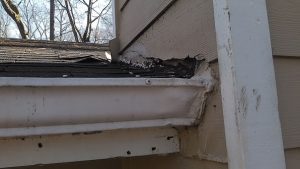
Kennesaw is about fifteen minutes up I-75 from our Marietta base. One trait shapes the work here. Builders put most of it up in a rush, in roughly the same twenty-year window. That means a great many houses are now reaching the same failure points at the same time.
Storms are how water gets into a Kennesaw house
Kennesaw sits in an active severe-thunderstorm corridor. The ground rises toward Kennesaw Mountain and Little Kennesaw on the south-west side, carrying heavy mature hardwood cover across the older neighbourhoods below it. That canopy is the mechanism that turns a wind event into a water loss.
A limb through roof decking is not a shingle problem. It opens the building envelope. Then it rains into the structure for however many hours remain of the storm and however many days remain before a roofer gets there. By the time anyone looks properly, water has run down the inside of the roof sheathing. It has soaked the attic insulation and the ceiling drywall. Then it has found its way into wall cavities on the floor below.
Two things go wrong at this stage, routinely. The first is scoping the damage from what shows on the ceiling, which is the smallest part of it. The second is putting off drying until someone repairs the roof. In a Georgia summer, that delay is exactly long enough for a water loss to become a mold loss. Drying has to start under a temporary cover, not after the permanent repair.
Wind-driven rain is the subtler version. It gets past flashing, ridge vents, gable vents and window heads without any visible damage at all, wets the sheathing and the cavity, and shows up weeks later as a stain, a smell or blistering paint with no obvious source.
When a whole subdivision ages at once
Kennesaw grew enormously through the 1990s and 2000s. Whole neighbourhoods went up within a few years of each other, built by the same handful of builders to the same specifications with the same components. That produces a pattern we see here more than almost anywhere else in the metro: things fail in waves.
Water heaters have a service life somewhere around ten to fifteen years. A subdivision built in 1999 hits that window together, and then hits it again when the replacements age out. Washing machine supply hoses, the rubber ones, perish on a similar clock. Flexible braided connectors under sinks and toilets fail at their crimps. Polybutylene appears in some of the earlier stock and fails without warning.
Here is the practical point for a homeowner. If a neighbour two doors down just lost a water heater and your house went up the same year, take note. A water heater can fail in a finished basement or an upstairs closet while nobody is home. That is one of the most expensive losses we deal with. It is almost entirely preventable.
Basements, and where Kennesaw water goes
The terrain means basements — finished, partly finished, and the daylight and walk-out kind on sloping lots. A finished lower level changes a water loss from an extraction into a sequence of judgement calls: carpet pad is effectively always a loss, carpet itself often is not, drywall wicks upward from the bottom plate and usually has to come out above the visible line. The insulation behind it holds water where no meter pressed against the surface will find it.
Noonday Creek and its tributaries drain much of the area and rise quickly in heavy rain. Worth knowing where the coverage line falls before you are standing in it: surface water entering from outside is flood, excluded from every standard homeowners policy written in Georgia, while rain entering through a wind-damaged roof in the very same storm is generally covered. Both can happen in one night, and how the loss is recorded at the outset tends to decide how it is treated afterwards.
Freeze events
Every few winters a hard freeze runs through and Kennesaw produces a cluster of burst pipes in the same week. The pattern is consistent: supply lines in unconditioned crawlspaces, in attics, in unheated garages and in exterior walls on the north face. The damage almost never happens during the freeze. It happens at the thaw, when a split line that has been plugged with ice starts running into a house nobody is in.
How we work a Kennesaw job
Stop the source, then establish the real extent before anything is torn out — moisture meters and thermal imaging rather than an assumption drawn from the stain. On a storm loss that includes the attic and the roof deck, not just the ceiling below it. We set containment where it is needed, extract, and run air movers and dehumidifiers sized to the actual space until readings reach a documented dry standard, monitored daily rather than set and left. Everything is photographed and logged, because your insurer will want to see what was wet and what it took to dry it.
Where a loss has been sitting long enough for mold to establish — common after storm damage, because the water arrives quietly and nobody is looking for it — that becomes a contained remediation, with the entry point corrected first.
Kennesaw jobs we handle
Storm and roof-leak water entry, water damage and structural drying, burst and frozen pipes, water heater and appliance failures, finished basement flooding, sewer and drain backups, fire and smoke damage and mold remediation — across Legacy Park, Brookstone, the Barrett Parkway corridor, Stilesboro and the neighbourhoods below Kennesaw Mountain.
We also work in Acworth and Marietta, and across the rest of metro Atlanta.
Based in Marietta, GA 30067 — 404-445-4561, answered 24 hours a day — or send us the details. Photos from jobs we have done.
Storm damage in Kennesaw: after the storm passes
After storm damage, Kennesaw residents should stay clear of downed lines and photograph everything before cleanup. Ready.gov lists severe weather safety steps. Related: Storm and flood damage cleanup, all restoration services and contact us. Local resource: Ready.gov severe weather.