Water damage in Acworth can turn into mold if nobody dries it. RapidRestore24 handles water damage for Acworth homes and businesses with extraction, drying and moisture checks. We answer our phone 24/7.
Acworth sits at the top of Cobb County, about twenty-five minutes from our Marietta base, wrapped around Lake Acworth and the southern end of Lake Allatoona. Water is the reason people live here. It is also why the restoration work in Acworth looks different from the rest of the county.
The empty-house leak
This is the Acworth job. Owners use a great deal of property around both lakes only part of the time. Think weekend places, seasonal homes, short-term rentals between guests and houses whose owners travel. A supply line, a water heater or a toilet fill valve fails in an empty building, and nothing stops it.
A burst half-inch supply line can move several hundred gallons an hour. In an occupied house someone hears it within minutes. In an empty one it runs until a neighbour notices water coming out under the door, or until the water bill arrives. We have walked into houses where a failure ran for days. Water had soaked the subfloor through two levels and cupped the hardwood. Cabinets had come apart from the bottom up, and drywall had gone soft to shoulder height. Mold had established itself through the entire affected area because the building sat warm, wet and closed up in Georgia summer humidity.
The difference between a bad day and a catastrophe here is almost entirely elapsed time. If a property sits empty for stretches, fit a water-leak shutoff. Or simply close the main and drain the lines when you lock up. It costs very little and it is the difference between a small repair and a gut.
Lake property and the moisture that never leaves
Proximity to open water keeps ambient humidity high, and that changes the arithmetic of drying. A crawlspace or a lower level near the lake starts wetter than an equivalent space inland. That means it takes longer to dry and needs more dehumidifiers. It also punishes any job that stops when the surface reads dry rather than when the structure actually is.
Lakefront lots slope, so daylight and walk-out basements are everywhere. They take water from two directions — plumbing from inside, and hydrostatic pressure from outside pushing through the wall or the cove joint where wall meets slab during heavy rain. Those are different problems with different fixes, and treating a seepage problem as a plumbing loss means it returns with the next storm.
Boathouses, docks, detached garages and workshops sit under Coverage B on a standard policy, generally capped at ten percent of the dwelling limit, which is worth knowing before you need it.
Mold gets a head start here
The combination is unkind. High humidity meets closed, empty buildings and crawlspaces or lower levels that never fully dry out. Mold does not need a dramatic flood in Acworth. A slow drip under a sink in a house nobody visits for three weeks is entirely sufficient.
The first sign is nearly always smell rather than sight. If a lake house smells musty when you open it up, that is not “closed-up smell,” it is a moisture problem telling you where to look. Crawlspace first, then under every fixture.
Storms, trees and the north end of the county
Acworth carries heavy tree cover and sits in the same severe-storm corridor as the rest of north-west Cobb. A limb through roof decking opens the building, and it rains inside until someone covers it. You then have a structural repair and a water loss running at the same time. Drying has to start under a temporary cover rather than waiting on the roofing schedule.
Proctor Creek and the lake margins mean low-lying parcels take surface water in heavy rain. That is flood, excluded from every standard homeowners policy written in Georgia — while rain coming through a wind-damaged roof in the same storm is generally covered. Both can occur in one night. How we document the loss at the start usually decides how the insurer treats it later.
How we work an Acworth job
On a discovered-late loss the first task is honest assessment: how far the water travelled, how long it sat, and what can realistically be saved. We map moisture with meters and thermal imaging rather than guessing from stains. That matters most in exactly these jobs, where the visible damage and the actual wet area may be rooms apart.
Then containment, extraction, removal of what cannot be saved, and air movers and dehumidifiers sized to the space — sized up for the humidity near the lake — running to a documented dry standard with daily monitoring. Everything photographed and logged. Where mold is already established, which on a long-running leak it usually is, that becomes a contained remediation with the source corrected first.
Acworth jobs we handle
Undetected and long-running leaks in unoccupied property, water damage and structural drying, basement flooding and seepage, burst and frozen pipes, crawlspace moisture and mold remediation, storm and roof-leak water entry, and fire and smoke damage — around Lake Acworth, the Allatoona shoreline, Historic Downtown Acworth and the Cobb Parkway corridor.
We also work in Kennesaw and Marietta, and across the rest of metro Atlanta.
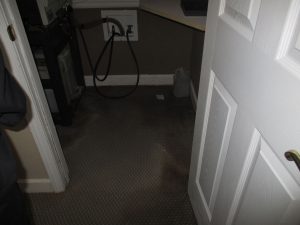
Based in Marietta, GA 30067 — 404-445-4561, answered 24 hours a day — or send us the details. Photos from jobs we have done.
Water damage in Acworth: stopping mold before it starts
The EPA advises drying wet materials within 24 to 48 hours. So deal with water damage in an Acworth home or business quickly. Related: Mold remediation, all restoration services and contact us. Local resource: EPA mold and moisture guide.