This water damage drying timeline walks through what happens hour by hour.
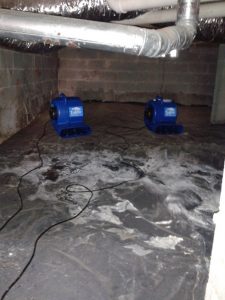
When water gets into a house, the clock starts right away. What you do in the first hour, the first day and the first two days decides whether you’re drying out a room or tearing it out. Here is what happens at each stage of a water damage job, and what you can do at each one.
Water damage right now? Call RapidRestore24 at 404-445-4561. The phone is answered 24/7.
The first hour: stop the water and stay safe
- Shut off the source. Close the main water valve for a burst pipe or appliance leak. For roof or storm water, move what you can out of the drip path.
- Cut the power to wet areas at the breaker, but only if you can reach the panel without standing in water.
- Take photos and video of the water, the source and the damaged rooms before anything is moved. Your insurance claim will need them.
- Call for help. The sooner water extraction starts, the less material has to come out.
Hours 1 to 24: get the water out
This is the most important day. Standing water keeps soaking into floors, walls and furniture for as long as it sits there.
- Water extraction. Pumps and extractors pull standing water out of carpet, pad and hard floors. Every gallon removed now is a gallon the drying equipment doesn’t have to evaporate later.
- Moisture mapping. Water travels under flooring and up into walls where you can’t see it. Moisture meters and thermal imaging show how far it has spread, so nothing wet gets sealed up and left behind.
- Removing what can’t be saved. Some materials don’t dry well. The U.S. EPA’s guidance is to discard and replace wet ceiling tiles and wet insulation, and to remove drywall that is swollen or has broken seams.
- Setting up drying equipment. Air movers and dehumidifiers go in to pull moisture out of the structure, not just the air.
Hours 24 to 48: the mold window
The EPA advises drying water-damaged materials within 24 to 48 hours to help prevent mold growth. That window is the reason fast extraction matters so much. The EPA also notes that the timing is a guideline: mold can still appear when materials dry quickly, and won’t always appear after 48 hours. Damp, warm Georgia weather doesn’t help.
- Drying equipment runs continuously.
- Moisture readings are taken again to confirm that wet areas are getting drier.
- Equipment is moved as areas dry, so the wettest spots get the most airflow.
Days 3 and beyond: drying to a measured standard
How long structural drying takes depends on the building, not on a fixed schedule. A room is done when moisture readings in the walls, floors and framing match dry, unaffected areas of the same house, not when the surface feels dry to the touch.
Drying takes longer when:
- water got under hardwood, into plaster walls or into a crawlspace;
- it sat for a while before anyone found it;
- it was dirty water, such as a sewage backup or floodwater, which needs cleaning and sanitizing as well as drying.
When mold is already there
If materials stayed wet for more than a couple of days, or you can see or smell mold, drying alone isn’t enough. Mold testing and inspection are done by a licensed mold assessor, and RapidRestore24’s crews handle the remediation. See mold remediation.
Water damage and your insurance claim
- Report the loss to your insurer as soon as you’re safe.
- Keep every receipt and every photo, before and during the cleanup.
- Ask your insurer whether your policy covers additional living expenses if you need to stay somewhere else.
- Flood damage is usually a separate flood policy, not your homeowners policy, and flood claims have their own deadlines.
Related services
- Water damage remediation
- Burst pipe water damage
- Sewage backup cleanup
- Storm and flood damage
- Areas we serve
Call RapidRestore24 at 404-445-4561. The phone is answered 24/7.
Water damage drying timeline at a glance
How long a water damage drying timeline runs depends on the materials, how long they were wet and whether water is hidden behind walls or under floors. Daily moisture readings tell us when drying is done. See our water damage remediation page, burst pipe cleanup and contact page.